.svg)

5 Signs Your Lawn Has a Grub Problem
5 Signs Your Lawn Has a Grub Problem
Grubs are one of the most destructive lawn pests in Rhode Island — and most homeowners don't realize they have them until serious damage has already been done. The tricky part? Grub damage looks a lot like drought stress or disease. Here's how to tell the difference.
What Are Grubs?
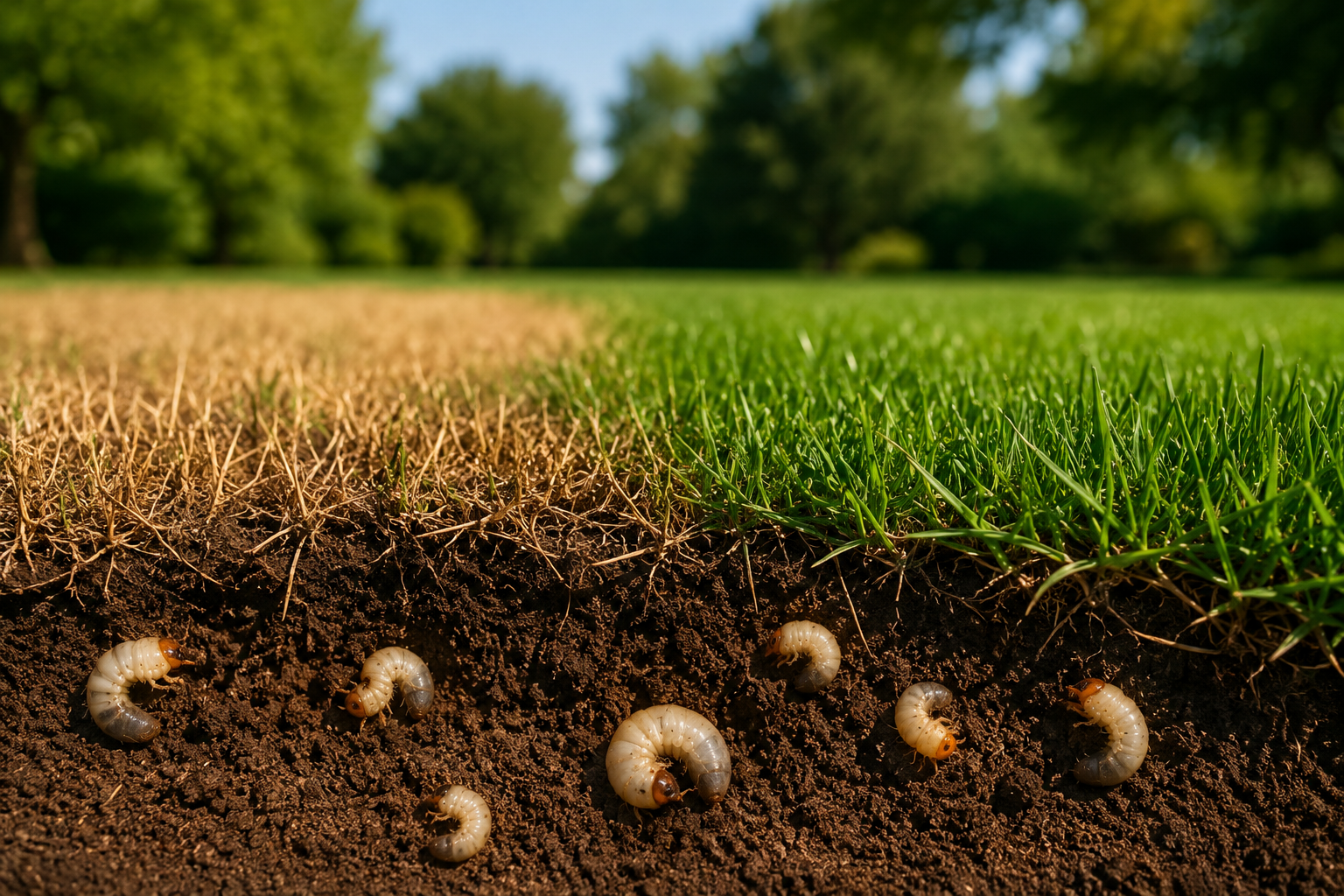
Grubs are the larvae of beetles — most commonly Japanese beetles and European chafers here in New England. They live just below the surface of your soil and feed on grass roots from mid-summer through fall. By the time visible damage appears above ground, the root system underneath may already be severely compromised.
5 Warning Signs to Watch For
- Irregular brown patches — Dead or dying areas that don't respond to watering are often a sign of root damage caused by grubs feeding below the surface.
- Spongy or soft turf — If your lawn feels unusually soft and spongy underfoot, especially in late summer, grubs may have eaten through the root system.
- Turf that pulls up like a rug — Healthy turf is firmly anchored to the soil. If you can peel back sections of grass with little resistance, grubs have likely destroyed the roots holding it in place.
- Increased bird, skunk, or raccoon activity — Animals digging in your lawn overnight are often feeding on grubs. If you're waking up to torn-up turf, that's a strong indicator of a grub infestation.
- Visible grubs in the soil — If you dig down 2–4 inches in a damaged area and find C-shaped white larvae, you have a confirmed problem.
When to Treat
The most effective time to treat for grubs is early summer, before the larvae grow large and become harder to control. Preventive treatments applied in June and July target young grubs before they can cause significant damage. Curative treatments in late summer and fall can still reduce populations, but results are less predictable.
GreenWorks' all-inclusive lawn care program includes grub control as part of every plan — so you're protected before damage ever starts. Get a free estimate and let us assess your lawn this season.